World
The U.S. Struck Dozens of Targets Inside Iran After Ballistic Missiles Were Fired at American Troops
By Mike Harper · July 30, 2026
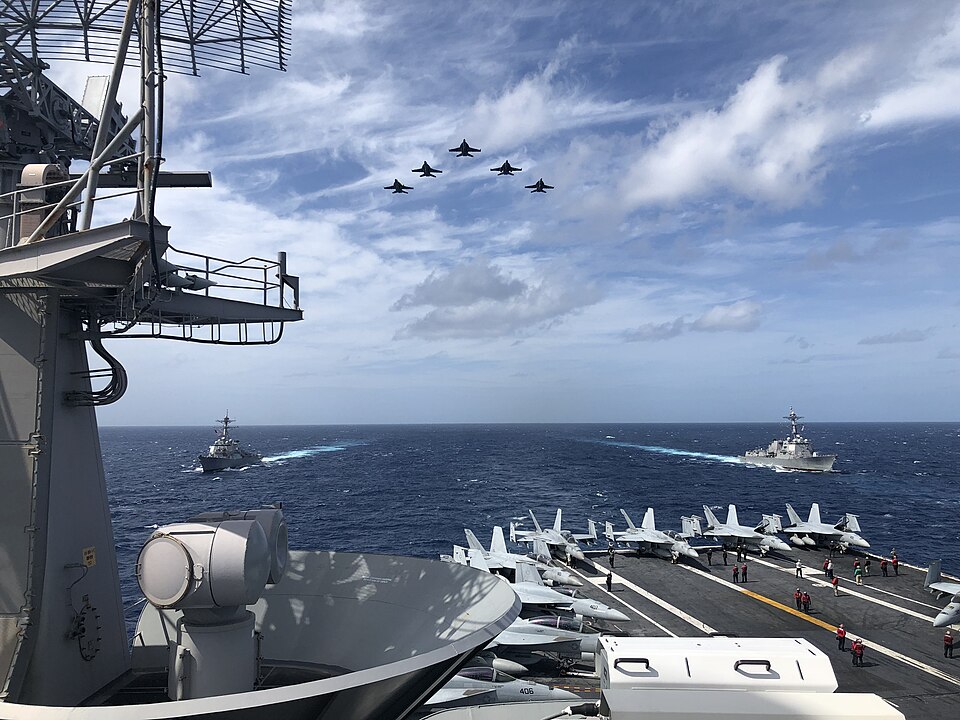
Iran fired ballistic missiles at American troops. Hours later, U.S. warplanes were over Tehran’s military infrastructure.
The U.S. military completed a two-hour wave of retaliatory airstrikes against dozens of targets across Iran late Wednesday, striking Islamic Revolutionary Guard Corps command centers, missile and drone facilities, coastal surveillance sites, and maritime capabilities in what the Pentagon described as a direct response to an Iranian ballistic missile attack on U.S. forces.
The operation began at midnight GMT Thursday and ended at 2 a.m., U.S. Central Command confirmed. CENTCOM said the strikes targeted infrastructure that posed direct threats to American forces, commercial shipping, and Gulf-state allies.
The escalation began Wednesday when Iran launched ballistic missiles at a U.S. base in Jordan. Jordan’s armed forces confirmed they intercepted and destroyed five incoming missiles with no casualties reported. President Trump said from the White House that Iran would be “hit very hard” in response.
Iran’s state media reported that three people — a couple and their child — were killed when a missile struck a residential area on Qeshm Island in the Persian Gulf. Explosions were also reported on Kish Island and in Fars province. The IRGC issued a statement pledging retaliation.
This is the most significant direct military exchange between the U.S. and Iran since the ceasefire collapsed earlier this month. Four American service members were killed in Iranian strikes on July 17 and 18 — deaths the Pentagon controversially reclassified into a new “Overseas Operations” category last week, a move that reduced the official war death toll from 18 to 14.
The conflict’s economic reach continues to grow. Oil prices had already risen sharply since hostilities resumed in early July, driven by disruptions to shipping in the Strait of Hormuz and attacks on energy infrastructure. The Federal Reserve cited Middle East conflict as a factor in elevated energy prices Wednesday when it held interest rates steady at 3.50%–3.75%. Mortgage rates are holding above 6.50%, and gas prices nationally have climbed for three consecutive weeks.
Saudi Arabia was drawn further into the conflict Wednesday when U.S.-Saudi strikes in Iraq killed four IRGC personnel and six Iranian pilgrims, according to Iranian and Iraqi officials. Iraq’s Popular Mobilization Forces threatened retaliation against both countries.
The war that began with U.S. strikes on Iranian nuclear facilities in June 2025, paused with a ceasefire, and reignited this month is now expanding — in geography, in casualties, and in cost. What comes next depends on whether Iran retaliates for Wednesday’s strikes, and whether the U.S. treats the IRGC’s response as another provocation requiring another response. That cycle has no obvious exit.