Lifestyle
What Happens to Your Hearing After 50
By Curtis Jones · October 17, 2026
Hearing loss after midlife rarely arrives as a sudden silence. It creeps. Conversations in restaurants get harder. The TV volume creeps up. Someone in the next room sounds muffled, and you blame the walls.
The National Institute on Deafness and Other Communication Disorders calls age-related hearing loss, or presbycusis, one of the most common conditions affecting older adults. About one in three people in the U.S. between 65 and 74 has hearing loss, and nearly half of people older than 75 have trouble hearing. Cleveland Clinic adds that age-related changes are the most common cause of hearing loss worldwide and affect 2 out of 3 people in the U.S. age 70 or older.
High pitches go first. Cleveland Clinic says a common early clue is trouble hearing certain high-pitched sounds, like birds singing or alarms. Women’s and children’s voices can be harder to follow than deeper ones. Background noise makes it worse. You may follow a one-on-one talk in a quiet kitchen and lose the thread at a holiday table.
Ringing can travel with the loss. Cleveland Clinic lists tinnitus among presbycusis symptoms. The sound may be a ring, buzz, hiss, or roar. It is not always loud, and it is not always constant. New or one-sided tinnitus is a reason to get checked rather than wait it out.
Social life takes a quiet hit. NIDCD notes that hearing trouble can make it hard to enjoy talking with family and friends, leading to feelings of isolation. Cleveland Clinic warns that straining to understand people can push some adults to avoid groups, which raises the risk of anxiety and depression. Pulling back from dinner invitations is sometimes a hearing issue disguised as a personality change.
Noise still matters after 50. Scientists do not yet know how to prevent age-related hearing loss itself, NIDCD says, but you can still protect against noise-induced damage. Loud music, high headphone volume, lawn equipment, concerts, and power tools add up. Earplugs or protective earmuffs, shorter exposure, and lower volume are the boring fixes that still work.
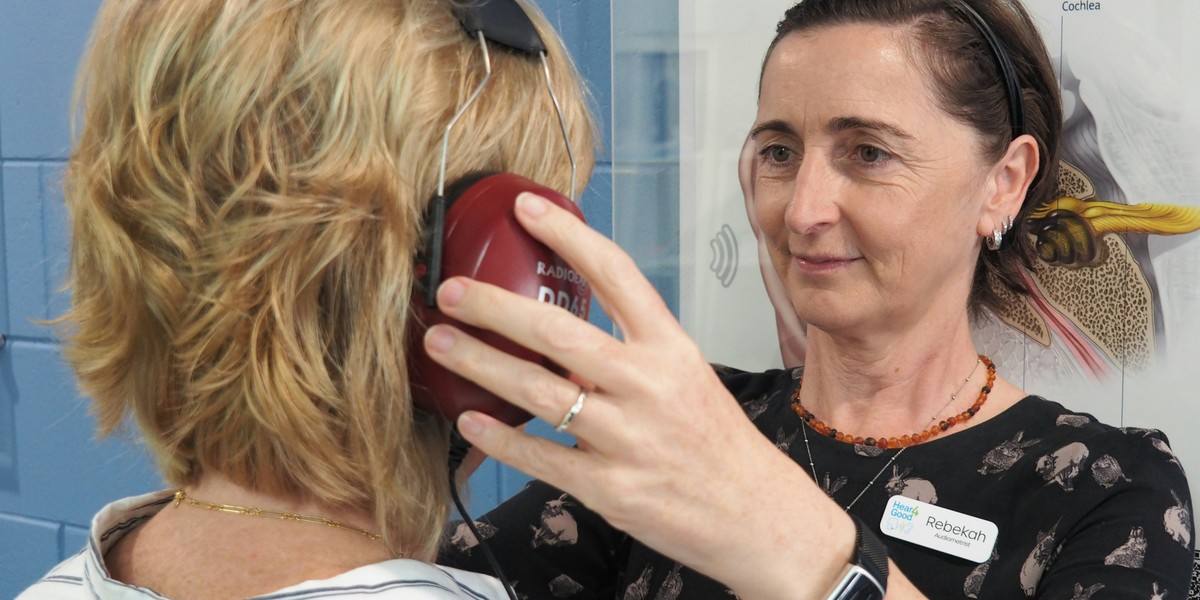
Screening is a concrete next step. If two or more of NIDCD’s screening questions sound familiar, such as trouble with TV dialogue, frustration talking with family, or avoiding groups, the agency says you should consider having your hearing checked. Start with your primary care doctor, an ENT, or an audiologist. A hearing test maps which pitches you miss and how severe the loss is.
Hearing aids are no longer only a specialty-clinic purchase. In 2022 the FDA created a category of over-the-counter hearing aids for adults 18 and older with perceived mild to moderate hearing loss. You can buy them in a store or online without a prescription or hearing test. They are not meant for severe or profound loss. If loud sounds are hard to hear, or an OTC device does not help enough, the FDA and NIDCD both say to see a hearing professional about prescription options.
There is no cure that restores youthful hearing. There is a clear path: notice the pattern, get tested, protect what you have left, and use amplification when it helps you stay in the conversation.
This article is for general information and is not medical advice. If you notice hearing changes, tinnitus, or trouble following conversations, talk with your doctor or a hearing specialist about screening and treatment options.