Politics
Raskin Introduces Bill to Create Presidential Fitness Panel
By Mike Harper · April 15, 2026
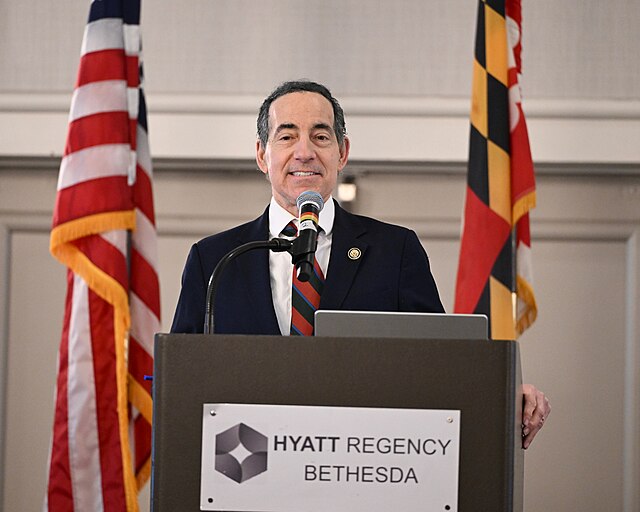
Last week Jamie Raskin demanded a cognitive test. This week he went further.
The Maryland Democrat and House Judiciary Committee ranking member introduced legislation Tuesday to establish a formal Commission on Presidential Capacity — the independent body called for but never created under Section 4 of the 25th Amendment. The bill, introduced with 50 Democratic co-sponsors, would create a 17-member panel of physicians, psychiatrists, and former senior executive branch officials with the power to examine the president and determine whether he is mentally or physically unable to discharge the duties of the office.
The 25th Amendment has included this provision since its adoption in 1967. Congress has simply never acted on it — until now.
Under Raskin’s bill, the commission would be composed of four physicians and four psychiatrists appointed by Democratic and Republican congressional leaders respectively, plus four former high-ranking executive officials from each side. Those 16 would then select a 17th member as chair. In an emergency, Congress could pass a concurrent resolution requiring the commission to examine the president within 72 hours and report findings within another 72 hours. If the vice president and a majority of the commission found the president incapacitated, the VP would assume the role of acting president.
The White House responded with its now-familiar dismissal. “Lightweight Jamie Raskin is a stupid person’s idea of a smart person,” spokesperson Davis Ingle said.
The bill has no realistic path to passage. Republicans control both chambers and Trump could veto it even if it somehow cleared Congress. Raskin and his allies know this. The legislation is less about immediate outcome than about building a record — forcing Republicans to take a public position on a constitutional body the amendment itself calls for, at a moment when Trump’s rhetoric around Iran has generated bipartisan unease even within his own coalition.
The strategic logic tracks with the broader Democratic playbook of recent weeks: cognitive test demand, 25th Amendment briefings, impeachment resolutions, and now formal legislation. Each step raises the temperature and expands the frame, even if none of the individual moves reaches a legislative endpoint.
Raskin framed the bill in national security terms: “We are at a dangerous precipice, and it is now a matter of national security for Congress to fulfill its responsibilities under the 25th Amendment to protect the American people from an increasingly volatile and unstable situation.”
What happens next depends almost entirely on whether any Republican breaks from the caucus to engage with the substance. So far, none have.