Politics
Johnson Unveils Third FISA Plan With Six Days Until Surveillance Powers Expire
By Mike Harper · April 24, 2026
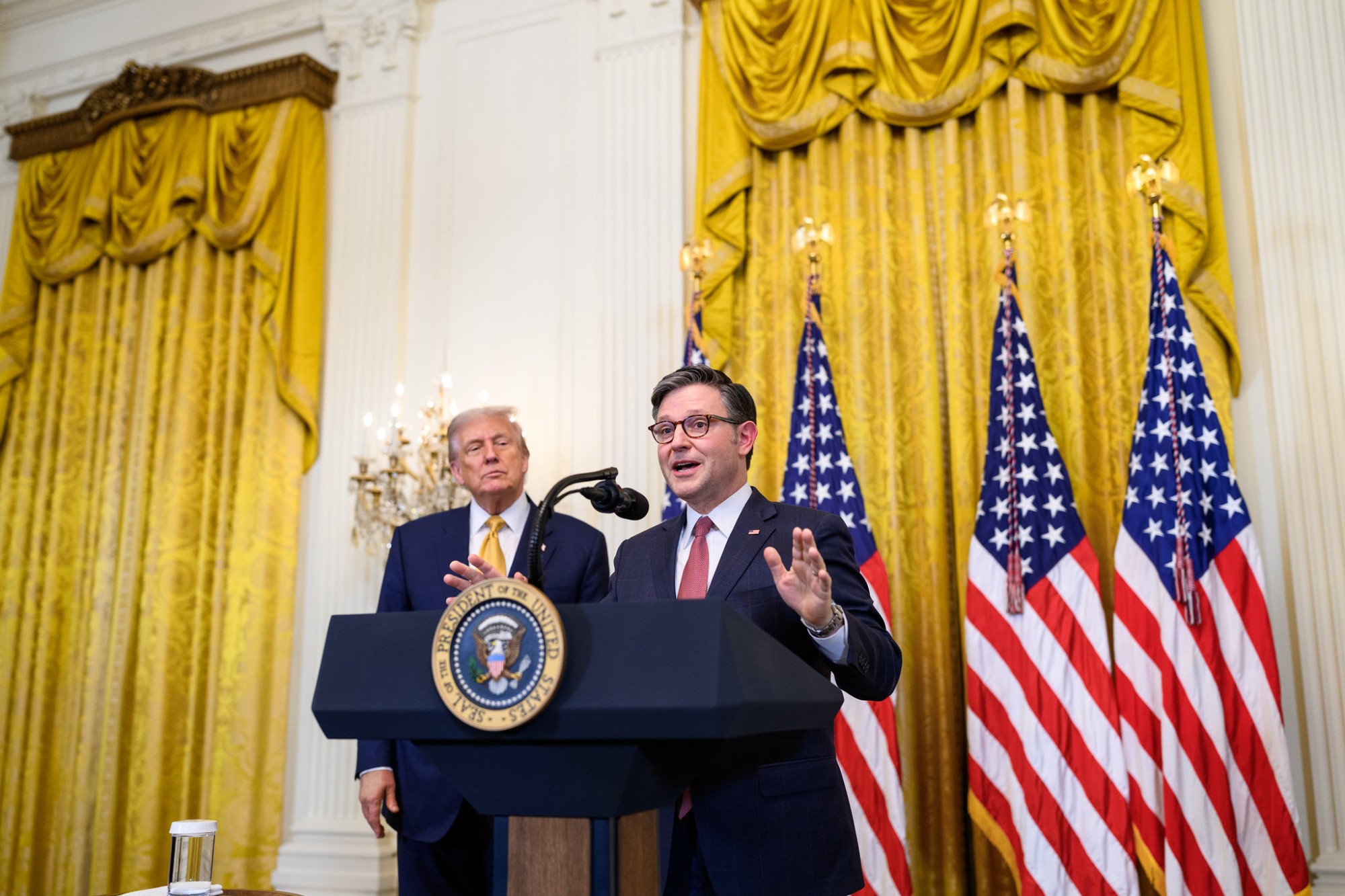
Speaker Mike Johnson has tried twice to extend the federal government’s most powerful domestic surveillance authority. Both votes failed. On Thursday he unveiled a third plan — with six days until the program expires entirely.
Section 702 of the Foreign Intelligence Surveillance Act, which allows U.S. intelligence agencies to intercept the electronic communications of foreign nationals located outside the United States, is set to lapse on April 30. The program covers nearly 350,000 foreign targets whose communications are collected — and because some of those targets are in contact with Americans, their calls, texts, and emails can end up in the federal government’s hands without a warrant.
That last part is why Johnson can’t get the votes.
For nearly two decades, a coalition of privacy-focused lawmakers from both parties has demanded that any extension of FISA 702 include a warrant requirement — a rule that would force law enforcement to obtain court approval before reviewing an American’s information gathered through the program. That demand killed an 18-month extension earlier this month. It killed a five-year extension days later. Johnson’s new bill does not include a warrant requirement either.
What it does include are procedural adjustments — monthly reporting requirements for the FBI, criminal penalties for willful abuse — that supporters describe as meaningful reform and critics describe as window dressing.
“This is not a reform bill and it’s not a compromise,” privacy advocate Elizabeth Goitein of the Brennan Center for Justice wrote after the bill’s release. “It’s a straight reauthorization with eight pages of words that serve no serious purpose other than to try to convince members that it’s NOT a straight reauthorization.”
Representative Jamie Raskin, a Maryland Democrat and constitutional law scholar who has been working on a bipartisan alternative, circulated a memo to colleagues urging opposition to Johnson’s plan. His core objection: the bill leaves the status quo intact on the question that has blocked every prior extension.
“FBI agents can still collect, search, and review Americans’ communications without any review from a judge,” Raskin wrote.
The bipartisan path that Raskin and House Intelligence Committee ranking member Jim Himes have been pursuing remains alive — but unclear. Himes told NPR on Wednesday that House Minority Leader Hakeem Jeffries was in direct contact with Johnson on a potential compromise, and that significant work was underway.
“There’s a lot of work being done here,” Himes said. “We’re sort of working out a process that will be inclusive rather than exclusive.”
Trump has weighed in on the side of a clean extension with no new restrictions. In a Truth Social post, he said he was willing to give up personal privacy rights for the sake of military and national security, and argued FISA was essential to protecting troops overseas and Americans at home.
What happens if April 30 arrives with no bill passed is not entirely clear. Intelligence agencies would lose the legal authority to collect new information under Section 702, though existing collections would remain accessible. The intelligence community has warned that allowing the program to lapse — even briefly — would create gaps in surveillance of foreign adversaries at a moment when the Iran war remains unresolved and U.S. forces are still engaged in the Middle East.
Johnson has until Wednesday to find a path through a House where his margin is narrow, his right flank opposes surveillance expansion, and his left is demanding privacy protections he has not been willing to include.