Lifestyle
6 Things Most Americans Get Wrong About the American Revolution
By Erica Coleman · July 4, 2026
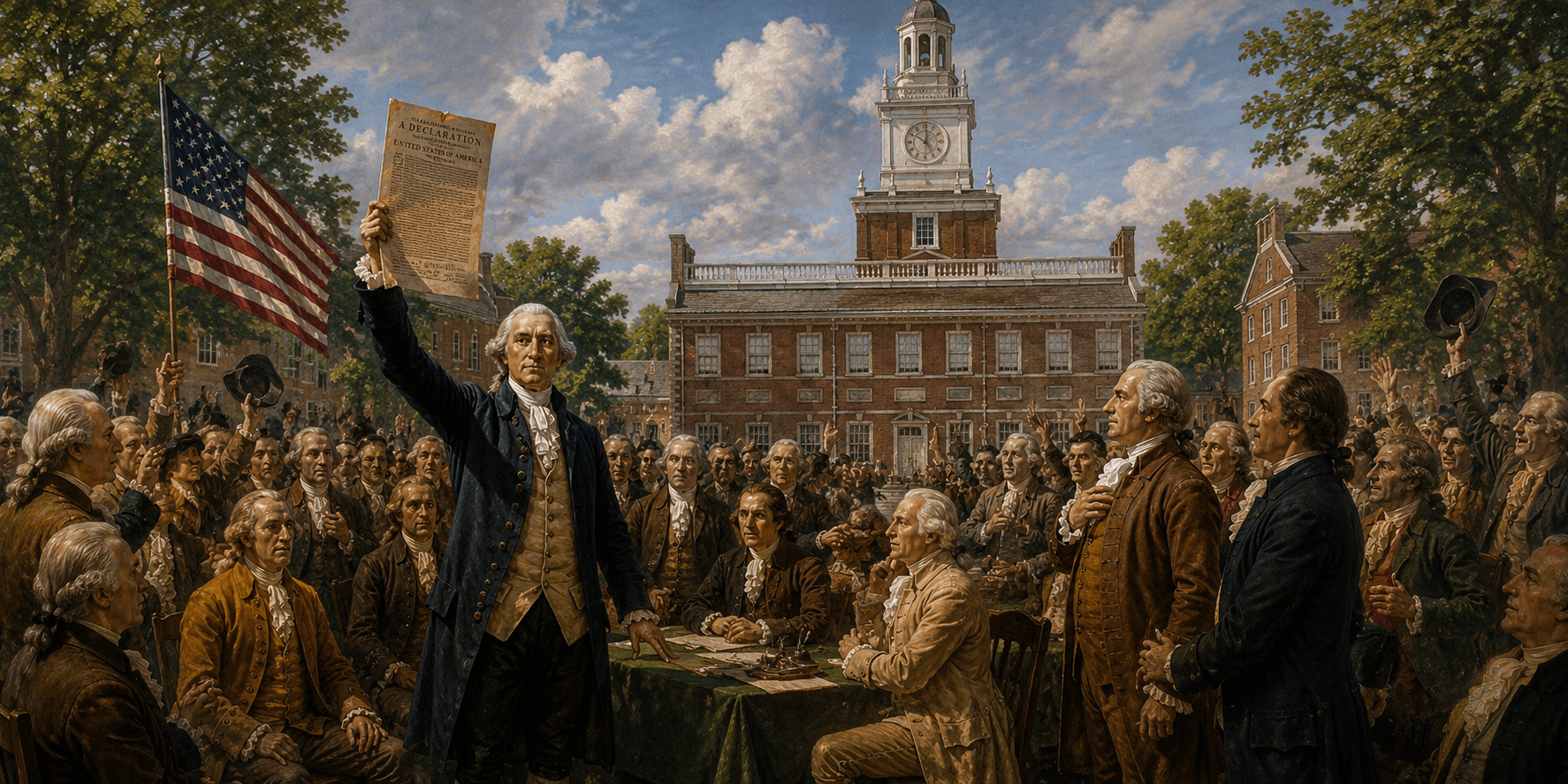
America turns 250 this week. The story most of us learned in school is inspiring. It is also significantly simplified. Here are six things about the Revolution that were more complicated than the textbook version.
1. Most colonists didn’t want independence
At the start of the Revolution, approximately one-third of colonists supported independence, one-third remained loyal to the Crown, and one-third wanted nothing to do with the fight either way. The idea that Americans rose up in unified defiance against British tyranny is a narrative constructed after the war was won. The reality was closer to a civil war within the colonies than a unanimous rebellion.
2. The Declaration didn’t create a new country — it announced a breakup
The Declaration of Independence is not a governing document. It doesn’t establish a government, grant rights, or create laws. It is a breakup letter — a formal announcement to the world that the colonies were severing ties with Britain. The actual governing framework didn’t come until the Articles of Confederation in 1781 and the Constitution in 1788. The Declaration explained why. The Constitution explained how.
3. The British weren’t just taxing for fun
The taxes that sparked the Revolution — the Stamp Act, the Townshend Acts, the Tea Act — were imposed to pay for the French and Indian War, which Britain had fought largely to protect the American colonies from French expansion. British taxpayers were already paying significantly more per capita than colonists. The issue wasn’t the amount of the tax — it was the principle that colonists were being taxed by a Parliament in which they had no representation.
4. The Continental Army almost didn’t survive its first winter
The winter at Valley Forge in 1777-1778 is remembered as a crucible that forged a fighting force. The reality was closer to catastrophe. Approximately 2,000 of the 12,000 soldiers stationed there died — not from battle but from disease, malnutrition, and exposure. Hundreds deserted. Washington wrote to Congress that the army was on the verge of “starving, dissolving, or dispersing.” The army survived not because of American resilience but because Baron von Steuben — a Prussian military officer — arrived and trained the soldiers in European military discipline.
5. France won the war as much as the colonies did
Without France, the Revolution almost certainly fails. France provided troops, naval power, weapons, uniforms, and critical financial support. The decisive battle at Yorktown in 1781 — which effectively ended the war — was won because the French navy blocked British reinforcements while French and American ground forces besieged Cornwallis’s army. Approximately 8,000 French soldiers fought at Yorktown alongside 11,000 Americans.
6. The Founders were much younger than most people imagine
In 1776, Alexander Hamilton was 21. James Madison was 25. John Jay was 30. Thomas Jefferson was 33. John Adams — considered one of the elder statesmen — was 40. Benjamin Franklin, at 70, was the outlier. The Revolution was largely conceived, argued, and fought by men in their twenties and thirties.
This weekend marks 250 years. The story is worth celebrating. It’s also worth knowing accurately.