Lifestyle
5 Pool Safety Rules Every Parent and Grandparent Should Know This Summer
By Erica Coleman · July 4, 2026
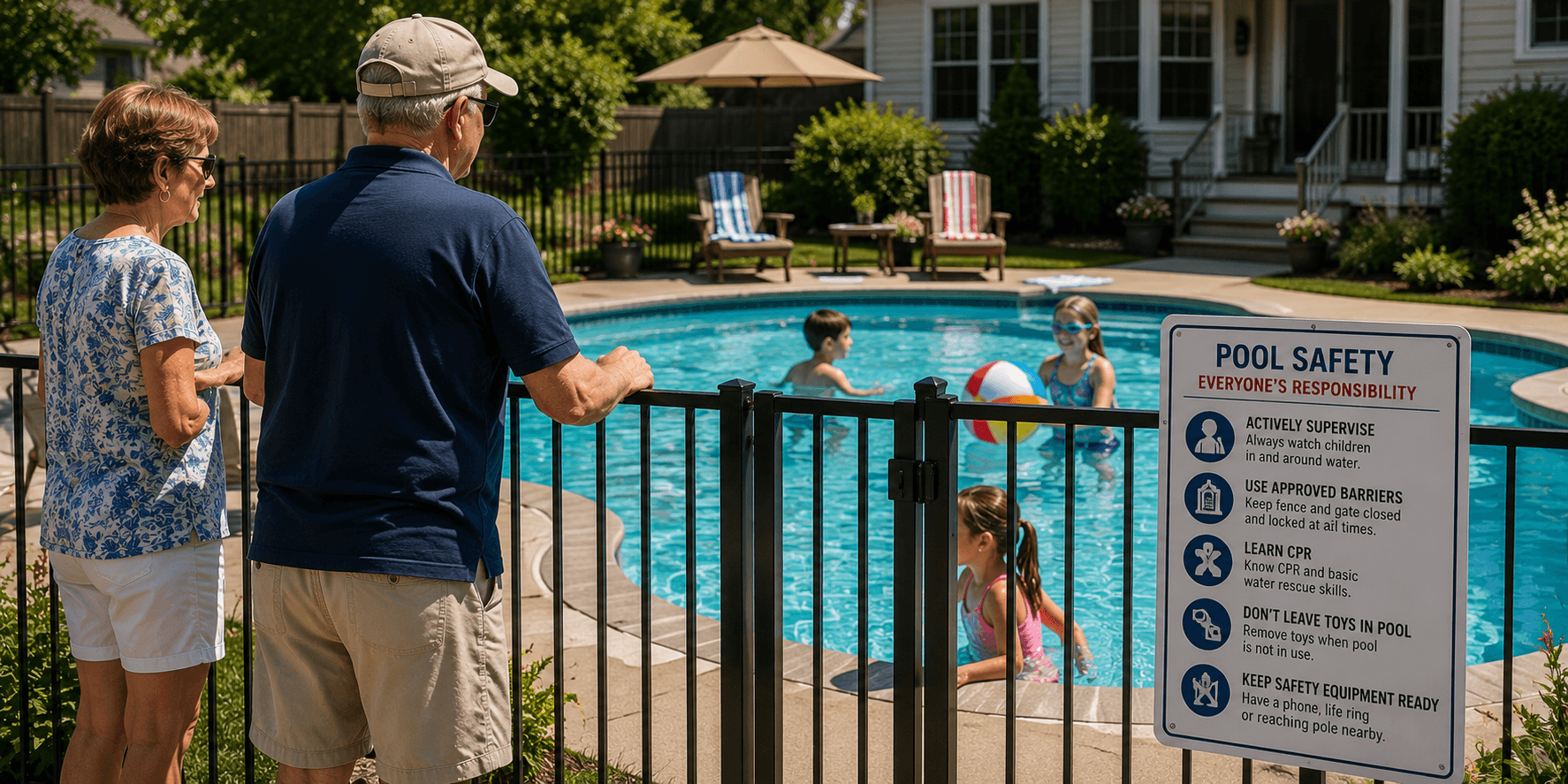
Drowning is silent. It takes less than a minute. And the child who drowns is almost never the child everyone was watching.
The CDC reports that drowning is the leading cause of death for children aged 1 to 4 and the second leading cause for children 5 to 14. Sixty-nine percent of young children who drown were not expected to be in or near the water when it happened. At a July 4th party, at a family cookout, at a grandparent’s house with a backyard pool — the risk is highest when the adults assume someone else is watching.
1. Designate a water watcher — and rotate every 30 minutes
The American Red Cross recommends assigning a specific adult to serve as water watcher any time children have access to a pool. That adult does nothing else — no phone, no food, no conversation, no reading. After 30 minutes, someone else takes over. The rotation prevents the fatigue and distraction that leads to the moment nobody was looking.
2. Fence the pool on all four sides
A four-sided isolation fence — separating the pool from the house and yard, not just the property line — reduces a child’s risk of drowning by 83% compared to three-sided fencing. The fence should be at least four feet high with a self-closing, self-latching gate. For above-ground pools, remove or lock ladders and steps when the pool is not in active supervised use.
3. Floaties are not safety devices
Inflatable arm bands, pool noodles, and inflatable rings are toys — not life-saving equipment. The CDC is explicit: air-filled toys are not safety devices and should never replace life jackets or adult supervision. Children who cannot swim independently should wear a properly fitted US Coast Guard-approved life jacket — not water wings.
4. Learn infant and child CPR
Bystanders rescue drowning victims before professional help arrives more than 60% of the time. The minutes between when a child is pulled from the water and when paramedics arrive determine whether the outcome is full recovery or irreversible brain damage. CPR certification through the Red Cross or American Heart Association takes a few hours and could save a child’s life in your own backyard.
5. If a child is missing, check the water first
Seconds count. If a child is unaccounted for — even briefly — check the pool, the hot tub, and any standing water before checking anywhere else. The instinct is to search the house, the yard, the street. The data says check the water first.
One last thing: drain covers. If your pool has a drain, confirm the cover is intact, meets current safety standards, and is securely attached. Suction entrapment — when hair, a limb, or clothing gets pulled into a drain — is rare but can be fatal.