Lifestyle
5 Home Safety Upgrades That Lower Your Insurance Premium
By Erica Coleman · July 11, 2026
Homeowners insurance premiums jumped 24% between 2021 and 2024, climbing to an average of $3,303 a year, according to a report from the Consumer Federation of America. Most of that increase came from forces no single homeowner controls — inflation, climate-driven storms, rebuilding costs.
But insurers do reward homeowners who make their houses harder to damage, and the discounts for doing so are often bigger than people expect. Here’s what actually moves the needle, according to insurance experts.
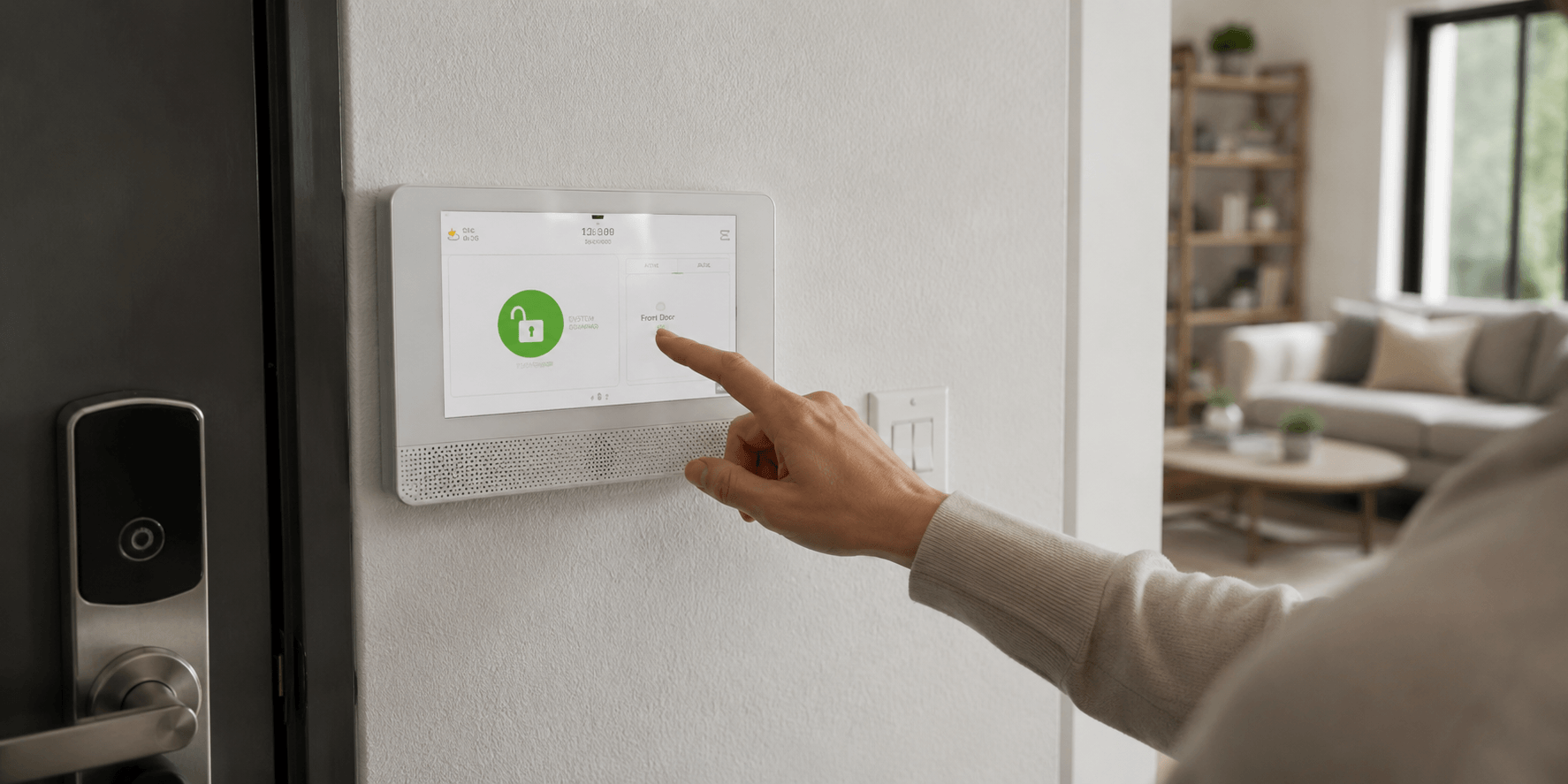
A monitored security system. This is one of the most consistently rewarded upgrades across the industry. A basic local alarm earns a modest discount, but a professionally monitored system tied to a central station can save up to 15% on your premium with some carriers. Insurers view a monitored system as a meaningful reduction in both burglary and fire risk — fire monitoring in particular carries more weight than theft monitoring, since a fire can destroy an entire home while a break-in typically doesn’t.
An impact-resistant roof. If your roof is aging, replacing it with Class 4 impact-resistant shingles can be one of the largest single discounts available — commonly 10% to 35% depending on your state and insurer. The savings are most dramatic in hail-prone states like Texas, Oklahoma, Colorado, and Missouri, where some insurers offer roofing discounts specifically tied to impact resistance. In hurricane-prone states, a wind mitigation inspection documenting wind-resistant roofing features can unlock separate credits on the wind portion of your policy, which in some regions makes up more than half the total bill.
Modern plumbing and electrical systems. Homes with original galvanized steel pipes or outdated electrical panels are increasingly flagged during four-point inspections, which many insurers now require for homes over 30 years old. Updating to PEX or copper plumbing, or upgrading an aging electrical panel, can move a home into a more favorable rating tier — and for older homes, it may be the difference between qualifying for standard coverage and getting pushed into a high-deductible policy.
Bundling your policies. This isn’t a home upgrade, but it’s one of the easiest discounts to claim and it’s worth mentioning alongside the physical ones. Buying your home and auto insurance from the same company typically saves 5% to 25% across both policies, and most major insurers offer it automatically once you sign up for multiple coverage types.
Fire mitigation around the property. For homeowners in wildfire-prone regions, insurers increasingly look beyond the structure itself. Clearing flammable brush and vegetation within roughly 30 feet of the home, and keeping gutters clear of debris, addresses one of the most common ways homes actually catch fire during wildfires — embers landing in gutters or getting pulled into attic vents. Some carriers are now using aerial and satellite imagery to assess this kind of defensible space directly, and a cleared perimeter can be the difference between standard coverage and a far more expensive high-risk policy.
The catch with nearly all of these: insurers won’t automatically apply a discount just because you made an upgrade. “It’s not a guarantee that insurers will lower premiums for homeowners who undergo mitigation projects,” one insurance expert cautioned, so it pays to ask your carrier which specific improvements qualify before you spend the money — not after.
Once work is done, send documentation to your agent directly rather than waiting for them to ask. A contractor’s certificate of completion, an inspection report, or photos of a finished upgrade are usually enough to get a discount applied to your next renewal.
None of this guarantees your premium won’t rise at all — broader market forces are still pushing rates up nationally. But a genuinely hardened home is one of the few variables actually within a homeowner’s control.