Politics
Trump Said He Won’t Renew the Trade Deal That Covers $1.5 Trillion in North American Commerce
By Mike Harper · June 11, 2026
The United States-Mexico-Canada Agreement — the trade framework governing $1.5 trillion in annual North American commerce — comes up for its mandatory six-year review on July 1. On Wednesday, Trump said he doesn’t intend to renew it.
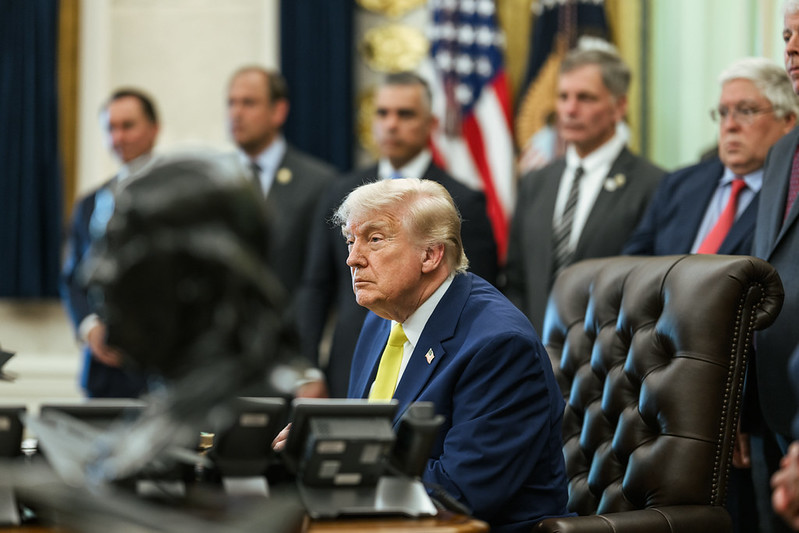
“I’m not looking to renew USMCA. I think it’s a bad deal,” Trump told reporters at a White House press availability. The statement puts the agreement on a path toward its 2036 expiration without the extension that the review process was designed to trigger.
USMCA replaced NAFTA in 2020. Trump signed it. He described it at the time as “the best and most important trade deal ever made.” He now says the terms are unfavorable to the United States and that he wants to renegotiate from scratch rather than extend what exists.
The practical effect of not renewing is not immediate. The agreement remains in force through its current term regardless of the review outcome. But the signal — that the president who signed the deal now wants to kill it — introduces significant uncertainty for manufacturers, agricultural exporters, and supply chain operators who have built their businesses around the framework’s terms.
Canada and Mexico both rely on USMCA for tariff predictability across the automotive, agricultural, energy, and manufacturing sectors. The automotive industry in particular is deeply integrated across the three countries — a single vehicle can cross the US-Mexico border eight times during production. Disrupting the tariff framework that governs those crossings would raise costs for manufacturers and consumers on both sides.
Trump’s statement came the same day he signed the $70 billion immigration enforcement bill and the same week he imposed new Section 301 tariffs of 10% on Canada, Mexico, and the EU. The combined effect is a posture of economic confrontation with America’s two largest trading partners simultaneously.
Neither Canada’s nor Mexico’s government responded publicly Wednesday. Trade analysts expect both countries to begin contingency planning for a post-USMCA framework if the review process collapses.