Lifestyle
5 Signs Your Water Heater Is About to Fail That Most Homeowners Miss
By Erica Coleman · August 1, 2026
Water heater failures cause an average of $4,444 in home damage, according to industry data. Most of them give warning signs for months. Here’s what to watch for.
Your hot water runs out faster than it used to. If a shower that used to stay hot for 15 minutes now goes lukewarm at eight, your water heater’s capacity is declining. Sediment buildup at the bottom of the tank forces the heating element to work harder and reduces the volume of usable water. Annual flushing can slow this process, but once the decline is noticeable, the tank may already be significantly compromised.
You hear banging, popping, or rumbling. Those sounds are hardened mineral deposits breaking loose and rattling inside the tank as the water heats. The thicker the sediment layer, the louder the noise — and the more the tank overheats trying to push heat through the buildup. By the time the sounds are obvious, the sediment has been accumulating for years.
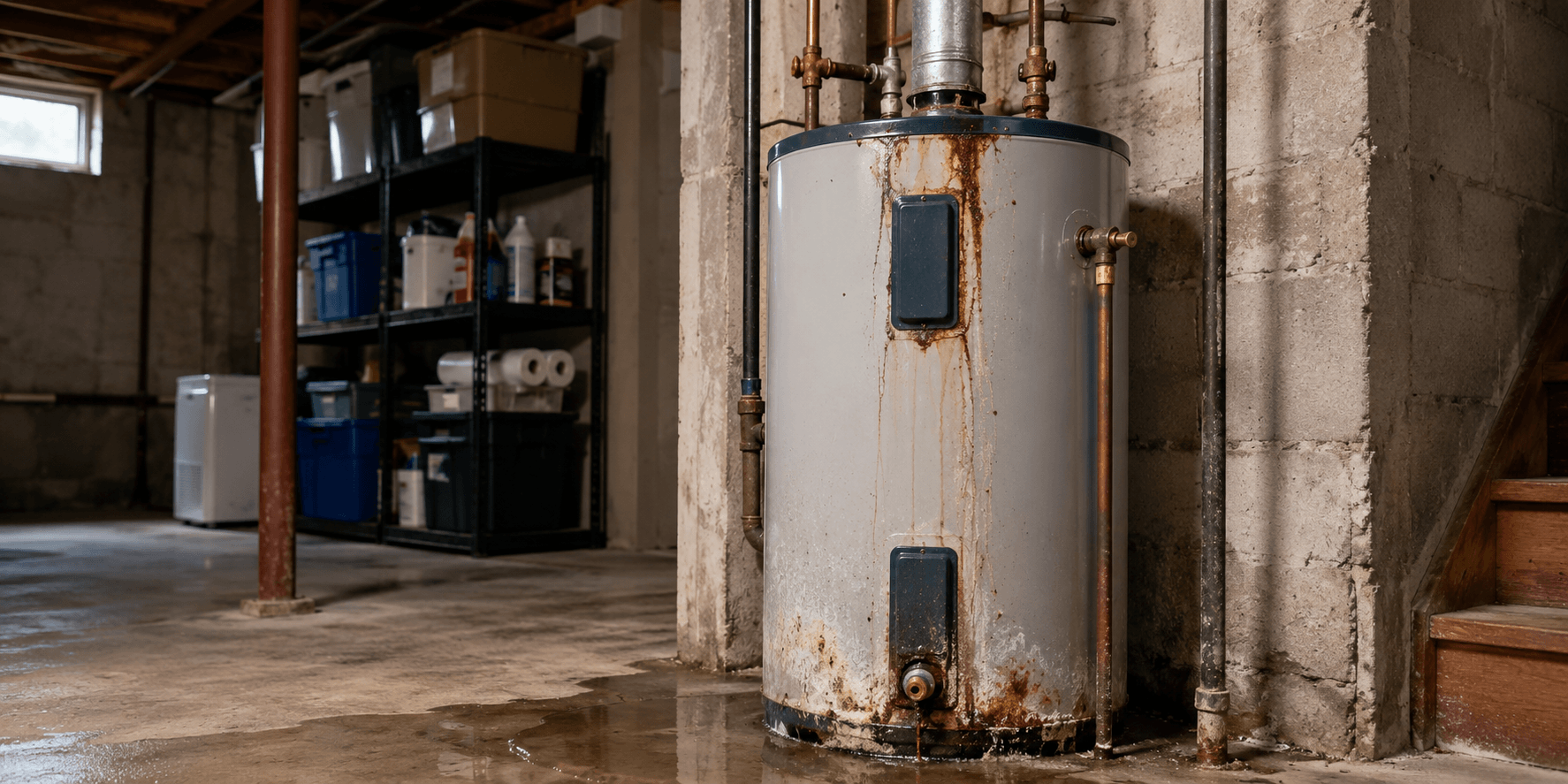
Your water looks rusty or discolored. Brown or rust-colored hot water — especially if the cold water runs clear — means the tank is corroding from the inside. Once the steel lining begins to rust, the process is irreversible. A corroding tank can rupture suddenly, releasing 40 to 80 gallons of water into your home with no warning. If rusty water is only coming from the hot side, the tank is the source.
There’s moisture or pooling near the base. Small puddles, dampness, or mineral stains around the base of your water heater indicate a slow leak. Leaks from the tank itself — as opposed to fittings or connections — cannot be repaired. The tank will eventually fail completely. Checking the area around your water heater monthly takes 30 seconds and can catch a slow leak before it becomes a flood.
Your unit is more than 10 years old. The average tank water heater lasts 10 to 15 years. Once a unit passes the 10-year mark, the risk of failure rises sharply — 68% of water heater failures occur in units older than a decade. You can check the age by reading the serial number on the manufacturer’s label, which typically encodes the production date. Proactive replacement before failure happens avoids both the emergency markup and the water damage.
Water heating accounts for roughly 13% of annual residential energy costs. A failing unit doesn’t just risk a flood — it’s also costing more to operate every month as it works harder to do less. Catching these signs early is the difference between a scheduled replacement and an emergency call at midnight.