Politics
Trump Floats 50% Tariffs on Countries Aligning Outside U.S. Trade Orbit
By Mike Harper · April 9, 2026
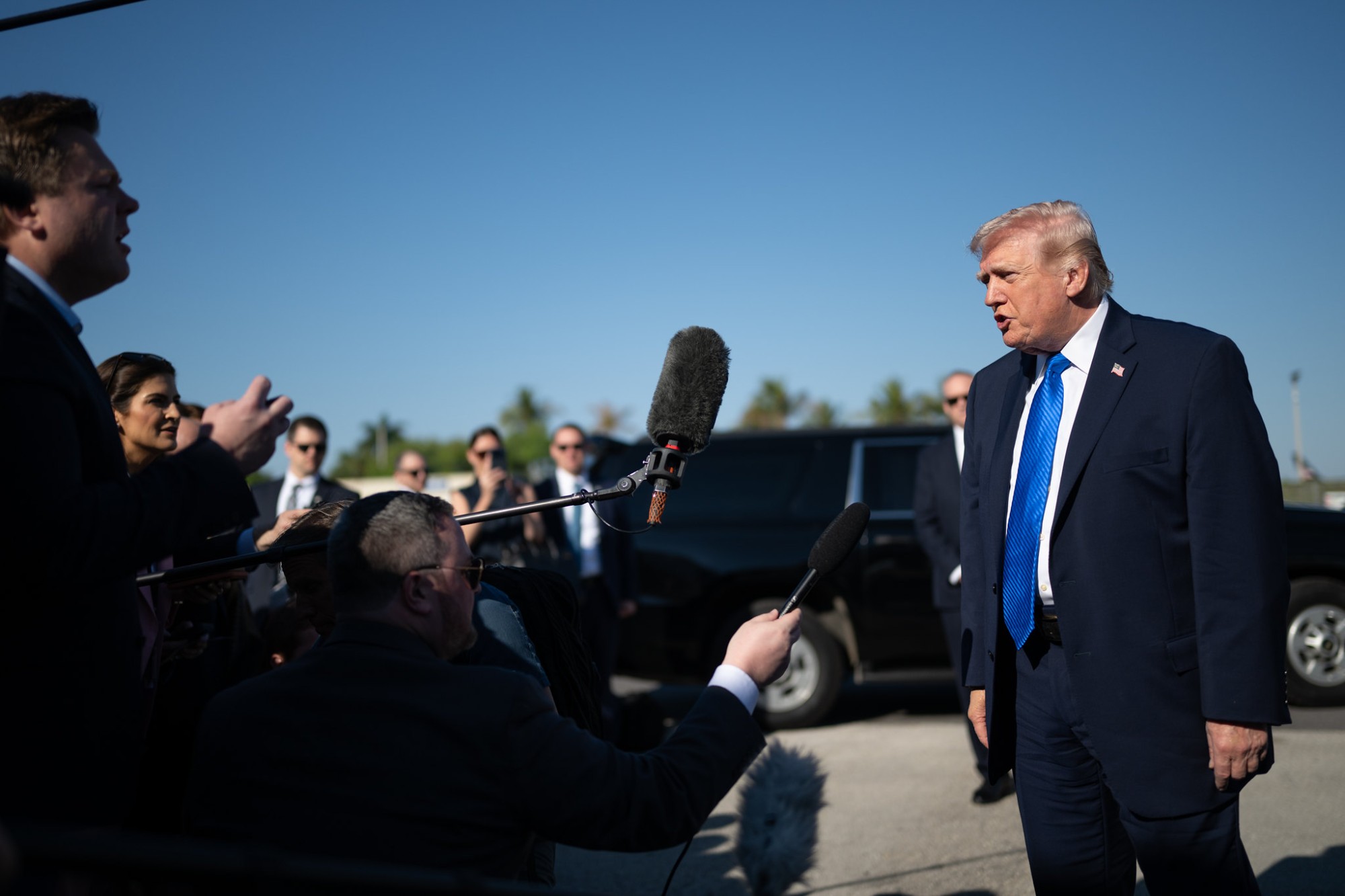
Donald Trump is bringing tariffs back into focus — but this time, the scope is wider than a traditional trade dispute.
In a recent campaign appearance, he suggested the United States could impose tariffs of up to 50% on countries that align themselves with alternative trade blocs or economic partnerships that operate outside U.S.-led systems. It wasn’t framed as a technical policy rollout. It was more directional than that.
But the direction was unmistakable.
According to Reuters, Trump positioned the idea as a response to what he described as countries organizing economically in ways that weaken U.S. influence. The implication is that alignment itself — not just direct trade behavior — could become a trigger for economic penalties.
That’s a shift.
Historically, tariffs have been tied to specific disputes: unfair trade practices, subsidies, dumping, or national security concerns linked to particular industries. What’s being suggested here is broader. It moves from targeting behavior to targeting alignment.
And that distinction matters.
Because alignment isn’t always clear-cut. Countries participate in multiple trade agreements at once. They balance relationships. They hedge. A policy that penalizes alignment risks pulling more countries into the scope than initially intended.
That’s where things start to widen.
There’s also precedent here, though not at this scale. During his first term, Trump imposed tariffs on a range of imports, including steel, aluminum, and goods from China, often using national security justifications. Those moves reshaped parts of global supply chains, but they also triggered retaliation and extended trade tensions.
This proposal would go further.
A 50% tariff doesn’t function as a mild adjustment. It operates more like a barrier. Imports at that level often become economically unviable, which forces companies to look elsewhere — for suppliers, for production, sometimes for entire operating models.
That kind of shift doesn’t happen in isolation.
It moves through supply chains, through pricing, through investment decisions. Manufacturers that rely on imported components feel it first. Consumers tend to feel it later, often through higher prices or reduced availability.
There’s also a timing question.
Global trade systems are already adjusting to geopolitical shifts — supply chain diversification, regional partnerships, strategic decoupling in certain sectors. Introducing tariffs tied to alignment could accelerate those trends, but not necessarily in a controlled way.
Sometimes acceleration creates clarity.
Sometimes it creates fragmentation.
Economists remain divided on how policies like this play out over time. Some argue tariffs can protect domestic industries and provide leverage in negotiations. Others see them as blunt instruments that can introduce inefficiencies and increase costs across the broader economy.
That divide hasn’t narrowed.
There’s also the response factor.
Trade actions at this scale tend to prompt countermeasures. Countries affected by tariffs often respond with their own restrictions, which can expand the scope of a dispute beyond its original intent. That dynamic has played out before, and it’s one reason why large-scale tariff policies rarely remain contained.
So while the proposal isn’t fully defined yet, the implications are already visible.
It points toward a trade approach that is less about targeted disputes and more about broader economic positioning — using tariffs as a way to influence how countries align themselves globally.
That’s a different kind of pressure.
And if it moves from rhetoric to policy, it would likely reshape not just trade flows, but relationships as well.