Politics
The Supreme Court Ruled 5-4 That States Can Count Mail-In Ballots Received After Election Day
By Mike Harper · June 30, 2026
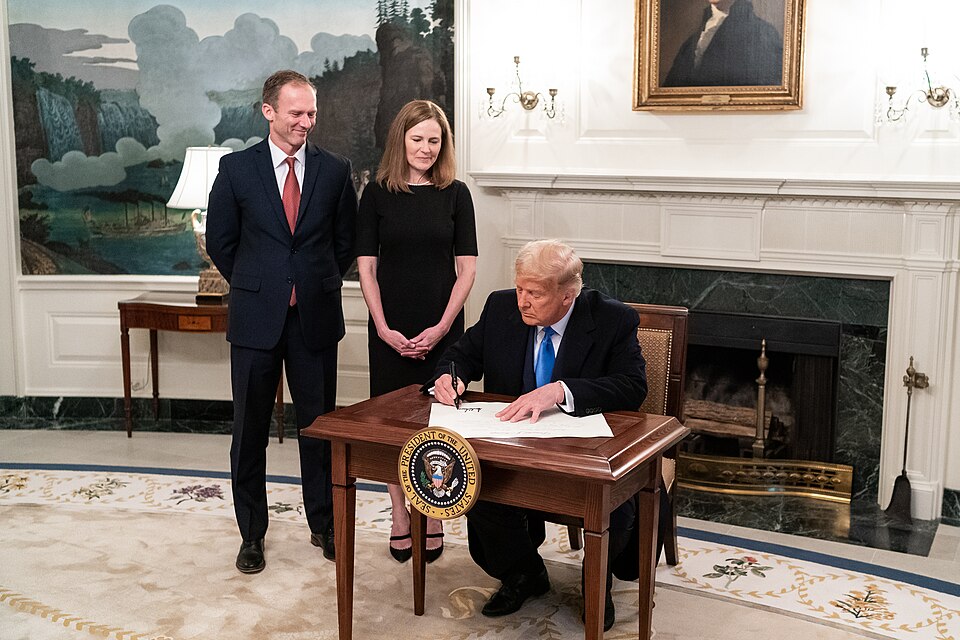
Amy Coney Barrett — Trump’s third Supreme Court appointee — just handed him his biggest election-law defeat.
In a 5-4 ruling in Watson v. Republican National Committee, the Supreme Court upheld Mississippi’s law allowing election officials to count mail-in ballots received up to five days after Election Day, as long as they are postmarked by Election Day. Barrett wrote the majority opinion, joined by Chief Justice John Roberts and the court’s three Democratic appointees — Sotomayor, Kagan, and Jackson. Alito, Thomas, Gorsuch, and Kavanaugh dissented.
Barrett framed the question narrowly.
“The question before us is a narrow one about timing. Federal law establishes the day when the electorate must make its choice. It does not establish the deadline by which all ballots must be physically received.”
The ruling protects laws in 14 states and Washington DC that allow mail-in ballot grace periods for all voters, plus 16 additional states that have grace periods specifically for military and overseas voters. Had the court ruled the other way, those laws would have been invalidated five months before the midterm elections — forcing states to overhaul their election systems on an emergency timeline.
Ohio had already preemptively changed its law in anticipation of the opposite ruling. It won’t need to.
Trump responded on Truth Social within the hour, calling the decision a “tremendous loss” and using it to renew his demand for the SAVE America Act. The timing was pointed — the same day he called the housing bill “a yawn,” he lost a Supreme Court case on mail-in voting brought by his own party.
The ruling also raises questions about Trump’s March 2025 executive order that attempted to impose a nationwide ban on mail-ballot grace periods for federal elections. The court’s holding — that federal law does not prohibit states from counting ballots received after Election Day — directly contradicts the legal premise of that executive order.
The practical effect for voters in November: if you live in one of the 14 states with mail-in ballot grace periods, your ballot will count as long as it is postmarked by Election Day. The states include California, Illinois, New York, Oregon, Washington, Mississippi, Alaska, and Nevada, among others. The ruling does not change any deadlines — it preserves the ones that already exist.
For the court, the alignment was notable. Barrett has voted with the conservative bloc on virtually every major case this term — including both immigration rulings last week. On this one, she crossed. Roberts crossed with her. The mail stayed.