Politics
The Supreme Court Just Eliminated One of Alabama’s Two Black Congressional Districts
By Mike Harper · June 3, 2026
The three-judge federal panel that reviewed Alabama’s congressional map was not ideologically sympathetic to the challenge. Two of its three judges were appointed by Donald Trump. All three of them looked at the map Republican legislators drew, weighed it against the Voting Rights Act and the Constitution, and found it “intentionally discriminatory.”
The Supreme Court overruled them Tuesday night.
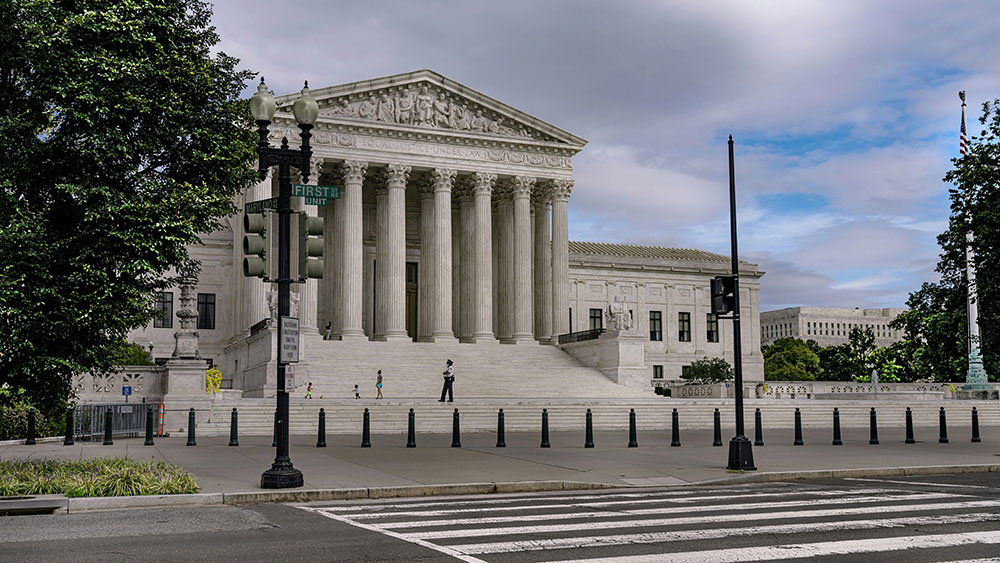
In an unsigned 6-3 ruling issued after business hours, the Supreme Court allowed Alabama to use a congressional map that eliminates one of the state’s two majority-Black congressional districts in November’s midterm elections. The practical effect is that Republicans will gain one additional safe House seat from Alabama heading into an election where they can afford to lose very few.
The court’s majority framed the ruling as a procedural matter — arguing that federal courts should not insert themselves into a state’s election maps on the eve of an election, regardless of the underlying constitutional question.
“Here, the District Court interposed itself into Alabama’s ongoing efforts to conduct its imminent 2026 congressional elections under maps that its elected representatives selected. Its view that conducting the elections under court-imposed maps would be more convenient for the State was not a valid justification for that intervention.”
Justice Sonia Sotomayor wrote a dissent joined by her fellow liberal justices. Her characterization of the majority’s reasoning was direct.
“The court doubled down on chaos.”
The Alabama ruling follows a now-established post-VRA pattern. After the Supreme Court’s April ruling in Louisiana v. Callais significantly weakened Section 2 of the Voting Rights Act, Alabama, Tennessee, and Louisiana all moved to eliminate or dilute majority-Black congressional districts. Each faced lower court challenges. Each has now been permitted to proceed.
The net effect of this redistricting cycle — Alabama, Louisiana, Tennessee, and other states combined — is that Republicans have added approximately 11 safe House seats through map changes before a single general election vote is cast. Democrats would need to dramatically outperform historical baselines to overcome that structural advantage in November.
Alabama currently sends six Republicans and one Democrat to the House. The Democrat — who represents one of the two majority-Black districts — now faces a map redrawn to make her district competitive for Republicans. She has not yet commented on her reelection plans under the new map.