Politics
Supreme Court Just Made It Much Harder to Fight Racial Gerrymandering
By Mike Harper · April 30, 2026
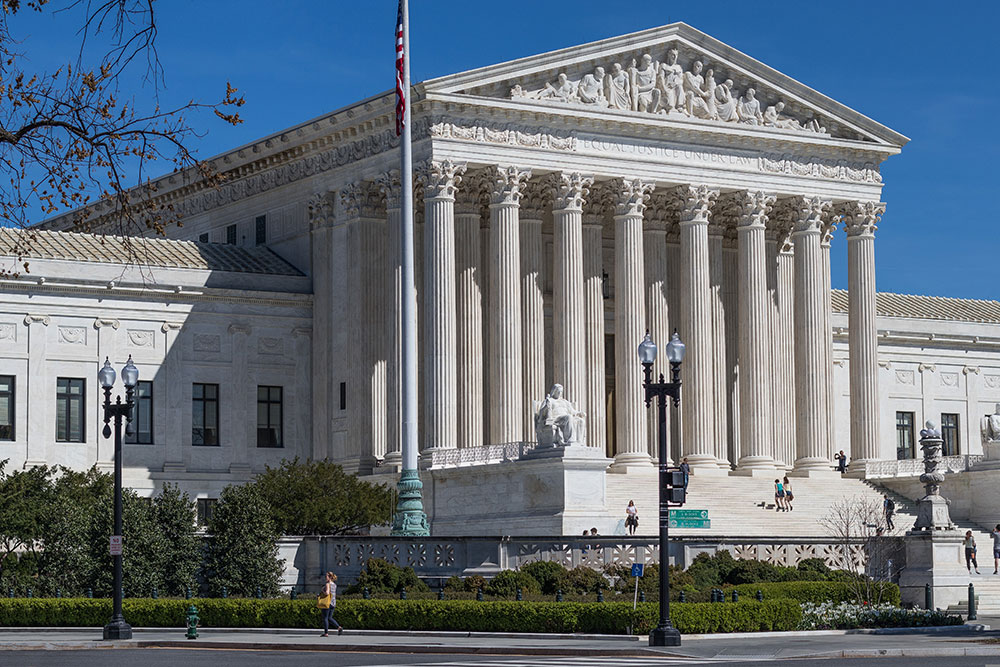
The Supreme Court handed down its ruling in Louisiana v. Callais on Wednesday morning. Within hours, it had rewritten the legal landscape of the redistricting war, handed Ron DeSantis a legal shield he didn’t expect to get this fast, and effectively ended the era in which minority voters could use federal law to challenge racially discriminatory maps.
The 6-3 decision, authored by Justice Samuel Alito and joined by the court’s five other conservative justices, struck down Louisiana’s second majority-Black congressional district and dramatically narrowed Section 2 of the Voting Rights Act of 1965 — the provision that for decades allowed voters of color to challenge maps that diluted their political power.
The ruling does not eliminate Section 2 entirely. But in her dissent, Justice Elena Kagan — joined by Justices Sotomayor and Jackson — described what the majority had done in terms that left little ambiguity.
“Today’s decision renders Section 2 all but a dead letter,” Kagan wrote. “The Callais requirements have thus laid the groundwork for the largest reduction in minority representation since the era following Reconstruction.”
The practical effect is significant. Section 2’s power came from its ability to hold states accountable not just for intentional discrimination but for practices that produced racially discriminatory results — even when those results were disguised as partisan decisions. That framework, known as the Gingles test after the 1986 case that established it, has been the primary legal tool available to Black and Latino voters challenging maps designed to dilute their representation for four decades.
Justice Alito’s majority opinion said that framework needed to be updated for “vast social change” across the country, particularly in the South. He also cited the court’s 2019 decision allowing partisan gerrymandering as creating “an incentive for litigants to repackage partisan claims under the guise of race-based challenges” — a framing that effectively allows states to use the permission to gerrymander on partisan grounds as cover for racial discrimination.
Plaintiffs will now have to provide significantly stronger proof that a state intentionally discriminated against voters of color — not merely that their maps produced discriminatory results. That is a substantially higher bar in cases where discriminatory intent is often deliberately obscured.
The timing matters enormously. Florida’s legislature is voting today on a DeSantis-drawn map that Democrats had argued would face immediate Section 2 challenges. DeSantis’s general counsel had explicitly argued last week that the VRA no longer constrained Florida’s mapmaking. Wednesday’s ruling is a direct confirmation of that argument — the legal shield DeSantis claimed he had, the court just handed him.
The implications extend well beyond Florida. Mississippi’s governor said he would call a special session to rapidly redraw maps following the ruling. Texas, which has had at least one political map blocked under Section 2 every decade since the law went into effect, could move to revisit its congressional, state House, and Senate maps. Analysts estimate that up to a quarter of the Congressional Black Caucus and roughly a tenth of the Congressional Hispanic Caucus could be affected by map changes that would previously have triggered Section 2 scrutiny — and now won’t.
For the 2026 midterms specifically, the ruling arrives at the exact moment when the redistricting war between the parties is being decided. Democrats had used Section 2 as a backstop against the most aggressive Republican maps. That backstop is now gone.