World
Republicans Break With Trump Over Greenland
By Jake Beardslee · January 16, 2026
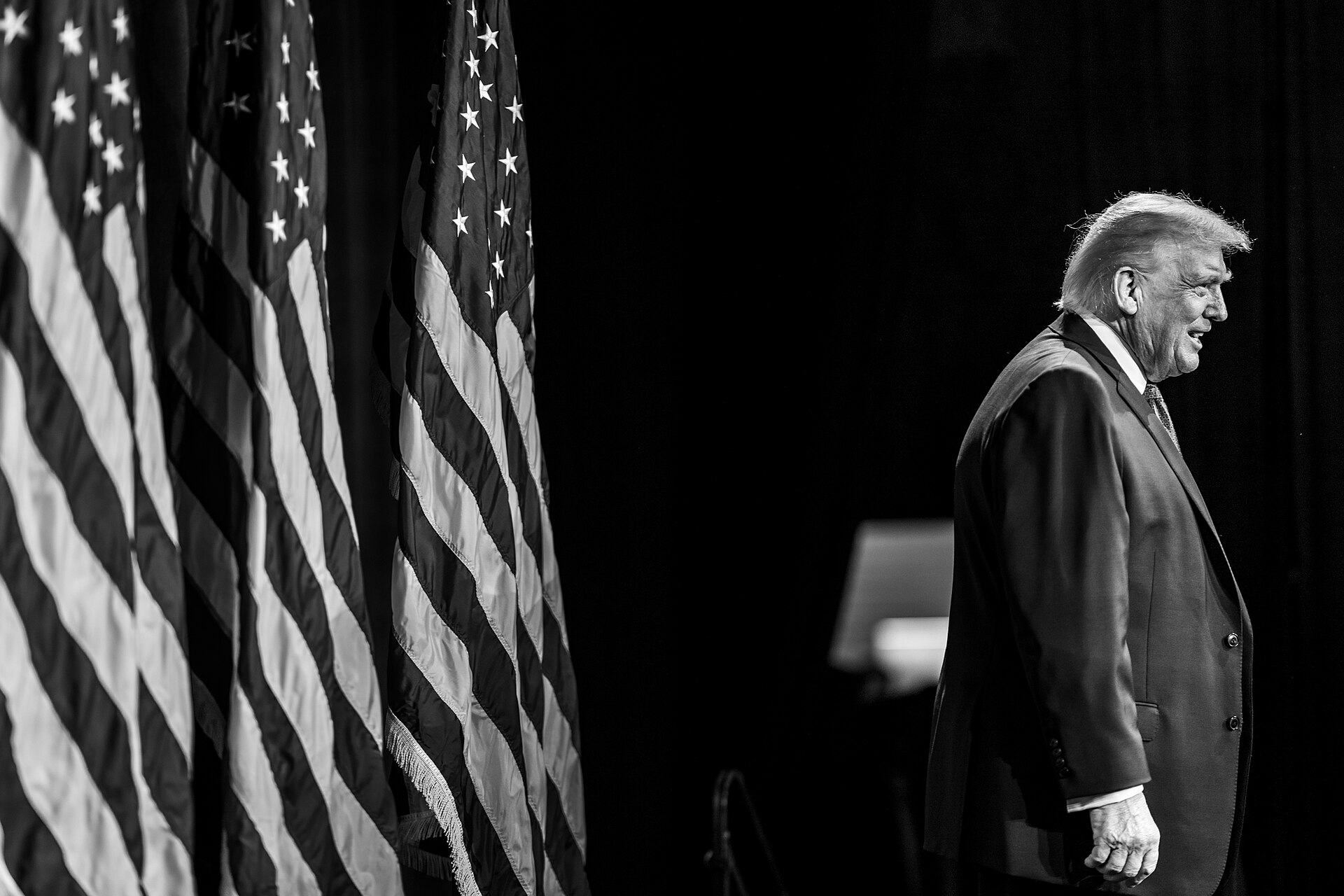
Republican lawmakers are increasingly voicing alarm over President Donald Trump’s repeated threats to bring Greenland under U.S. control, marking one of the sharpest internal party clashes of his second term as concerns rise over potential military escalation against a NATO ally.
Trump has continued to suggest the United States could seek control of Greenland, despite objections from Denmark, which governs the territory, and Greenland’s elected leadership. The rhetoric has drawn rare public pushback from Republican lawmakers, several of whom warn that any attempt to use force would be quickly challenged by Congress.
Sen. Thom Tillis (R-N.C.) said lawmakers would act if Trump appeared to be preparing military action, stating that “if there was any sort of action that looked like the goal was actually landing in Greenland and doing an illegal taking … there’d be sufficient numbers here to pass a war powers resolution and withstand a veto.”
Rep. Don Bacon (R-Neb.) went further, predicting severe political fallout and calling Trump’s Greenland fixation “the dumbest thing I’ve ever heard.”
Behind the scenes, lawmakers are also attempting to reassure U.S. allies. A bipartisan delegation of House and Senate members is set to travel to Copenhagen to deliver the message that military action does not have support on Capitol Hill. Senate Majority Leader John Thune, while not joining the trip, echoed that position, telling reporters that “there’s certainly not an appetite here for some of the options that have been talked about or considered,” an apparent reference to possible military intervention.
The emerging dissent represents one of the most significant breaches between Republican lawmakers and the president since Trump began his second term. Earlier discomfort over his foreign policy decisions, including a recent U.S. operation that removed Venezuelan President Nicolás Maduro, failed to produce lasting legislative constraints after the administration offered assurances on future actions.
Democrats believe Greenland may present a different test, given that it is sovereign territory of a NATO ally. Sen. Tim Kaine (D-Va.), who helped author recent war powers legislation, suggested bipartisan support could materialize if Trump escalates further, adding, “we might on Greenland.”
Former Republican leader Sen. Mitch McConnell (R-Ky.) issued one of the strongest warnings to date, arguing that military action against Greenland would be “an unprecedented act of strategic self-harm” that risks “incinerating” NATO alliances.
Despite growing criticism, lawmakers acknowledge that preemptively blocking presidential action remains difficult. Many appear to be relying on political pressure rather than immediate legislative restrictions to deter escalation.
Democrats plan to introduce multiple war powers resolutions addressing Greenland in the coming months. Tillis, however, said he would not currently support such a measure absent evidence of imminent action, arguing it would “legitimize” a threat he does not believe is now real.
Instead, Tillis has focused his criticism on senior administration officials he believes are encouraging extreme proposals. While a Greenland takeover might be supported by hard-line deputy chief of staff Stephen Miller, Tillis said “it’s not the position of the U.S. government,” adding that this was “another reason I’m going to Copenhagen.”
Sen. Lisa Murkowski (R-Alaska), a key voice on Arctic policy, has introduced bipartisan legislation affirming U.S. partnership with Greenland and Denmark, stressing “mutual respect for sovereignty and territorial integrity” and that any military action would require congressional authorization. She has also co-sponsored a bill to prohibit the administration from using funds to blockade, occupy, annex, or assert control over Greenland or any other NATO member’s territory.
Murkowski described the moment as extraordinary, saying, “we are operating in times where we’re having conversations about things that we never thought even possible,” and adding, “to use the name Greenland in the context of a war powers resolution is absolutely stunning,” according to Politico.