Lifestyle
One Year After Buying in The Villages, a Retiree Is Selling: ‘If My House Is Totaled, I Only Get $100,000 in Insurance’
By Mike Harper · November 25, 2026
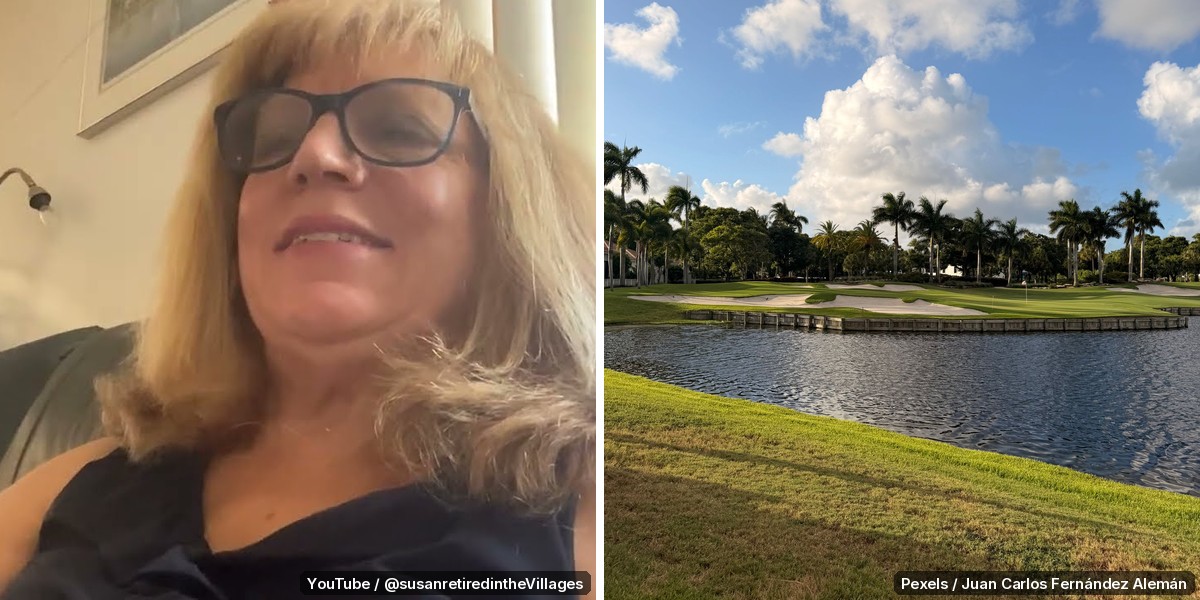
Susan started her YouTube channel, Susan In The Villages (@susanretiredintheVillages), to help other people sort out housing in the Florida retirement community. A year in, she had news of her own.
“My name is Susan. I live in the villages in Florida,” she says at the start of the video. “So I’ve owned my home one year. I gained some insight and some expertise in dealing with life in Florida. But after one year I’ve decided I’m selling my home.”
She is not leaving the community. She says she plans to stay in The Villages and has a good idea where she wants to go next. The problem is the house itself, and the first reason she gives is insurance.
“My problem is I live in a modular home,” she explains. “My modular is from the 80s, late 80s. So they built it offsite and brought it onsite. It’s beautiful. I have no complaints living here, but my insurance is sort of challenging.”
Then she lays out the math that changed her mind. “If my house is totaled, I only get $100,000 in insurance. And there’s no way I can rebuild my house for $100,000. I’m already $150,000 in the hole from that point on.”
The premium does not make up for it, in her view. “My insurance isn’t cheap. I’m not paying $1,000 a month, but I’m not getting any coverage. So if something happens, I’m gonna be out of a house.”
That gap pushed her to think further ahead. “I mean, I’m a young retiree. I have a long way to go,” she says. “And do I want a house that I can actually use to get a reverse mortgage on?”
Insurance is not her only reason. In the video she also describes a big golf course lot that takes more upkeep than she wants, and a floor plan that doesn’t give two people enough privacy for the roommate arrangement she likes. Next, she says, she wants a cement block house, which she sees as better able to stand up to hurricanes.
Her situation points to a question any homeowner can check: what a policy would actually pay if the house were destroyed. Florida’s Department of Financial Services explains in its homeowners insurance overview that an actual cash value policy deducts depreciation, while a replacement cost policy pays to replace what was lost. It adds that most replacement cost policies require coverage equal to a set share of the replacement value, normally 80%, and that carrying too little can leave the owner paying part of a partial loss. The department also says automatic yearly increases may not keep pace with construction costs, so owners should review the amount every year.
Under Florida law, insurers must offer replacement cost coverage before issuing a homeowners policy. The same statute says an insurer can’t refuse to issue or renew a policy solely because a roof is less than 15 years old.
For readers weighing a reverse mortgage later, the Consumer Financial Protection Bureau notes that the most common type, a Home Equity Conversion Mortgage, is only for homeowners 62 and older, and that borrowers must keep paying property taxes and homeowners insurance and keep the house in good condition.
Florida homeowners with coverage questions can reach the state’s insurance consumer helpline at 1-877-693-5236. Asking an agent for a fresh replacement cost estimate is one way to see whether a policy limit matches what a rebuild would cost today.
This article is for general information and is not financial, insurance or legal advice. Susan’s story and quotes are from her YouTube video; insurance information is from the Florida Department of Financial Services, Florida statutes and the Consumer Financial Protection Bureau. This article was produced with the assistance of AI and fact-checked against the sources cited by LightWave Reports.