Politics
Ohio’s Senate Race Opens. Both Sides Used Epstein.
By Mike Harper · May 7, 2026
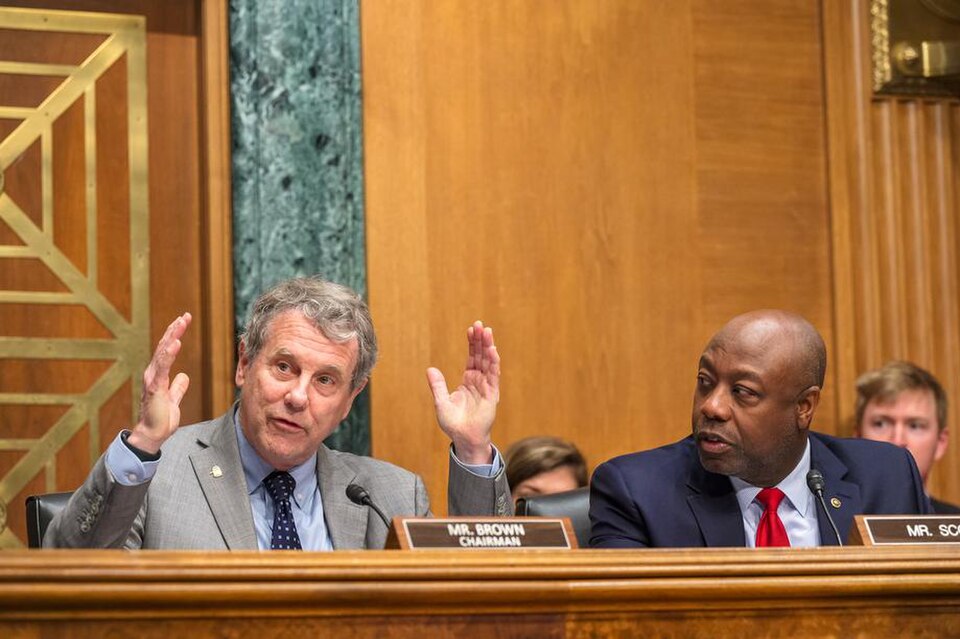
The Ohio Senate race is the contest Democrats most need to win in November. The Republican candidate is the incumbent nobody knows. The Democrat is a three-term senator who just lost two years ago and is trying to come back. And the first ads either of them ran were about Jeffrey Epstein.
Sherrod Brown won his Democratic primary Tuesday night, defeating a political unknown to set up what is expected to be one of the most expensive Senate races of 2026. He will face Republican incumbent Jon Husted — who was appointed to the seat last year when JD Vance left it to become vice president — in a general election that both parties view as central to determining Senate control next year.
Brown did not appear in his first campaign ad. Instead, a narrator described the money Husted’s campaigns received from associates of Leslie Wexner — the Ohio retail billionaire who was Jeffrey Epstein’s most significant financial backer and longtime business partner. “Jon Husted — who’s he really working for?” the narrator asks.
The specific figures: Husted’s campaigns had received donations from Wexner associates over the years. Husted himself acknowledged the donations and donated a total of $34,300 — encompassing contributions from Wexner and his wife — to an Ohio charity working with human trafficking victims this year, ahead of the ad’s release. Husted’s campaign manager responded by noting that Brown had also accepted $12,700 from Wexner’s wife between 2011 and 2017. “Who knows what that paid for?” the campaign manager said.
Polling shows the race is either a dead heat or Husted narrowly ahead, but even Republicans acknowledge the environment is moving against them. Former Ohio Republican Representative Jim Renacci, who lost to Brown in 2018, compared the current environment directly to that race. “I tell everybody I think every Republican is going to have a tough time because you’re running into a headwind,” he said. “It’s almost a match of where I was in 2018.”
The race has a structural oddity that makes it unusual by modern standards. Husted has no primary challenger — a rarity for an appointed Senate incumbent — which has kept his profile lower than Brown’s throughout the spring campaign season. Brown raised $17 million by mid-April, more than double Husted’s $8.1 million. Outside groups are expected to pour money into the state on both sides, narrowing the fundraising gap before November.
Ohio is also notable for a separate legal complication hanging over Husted. He is expected to be called as a defense witness in October in a major energy corruption trial involving top Ohio executives — timing that Democrats believe will generate a negative news cycle for Husted in the final weeks before the election.
The Epstein ad is a calculated opener: name recognition for a little-known incumbent, emotional charge for a motivated Democratic base, and a connection to the broader Epstein document release story that has generated sustained conservative anger at politicians in both parties. Democrats are betting the Epstein name travels further than the nuance of who received what from whom and when. Brown’s team did not comment on the specific allegations behind the ad when asked.
The race begins with both candidates’ fingerprints on the same name. The one who controls what that name means to Ohio voters by November will likely win the seat.