Sports
Nick Saban Advocated Curbing NIL In Senate Testimony
By Curtis Jones · June 4, 2026
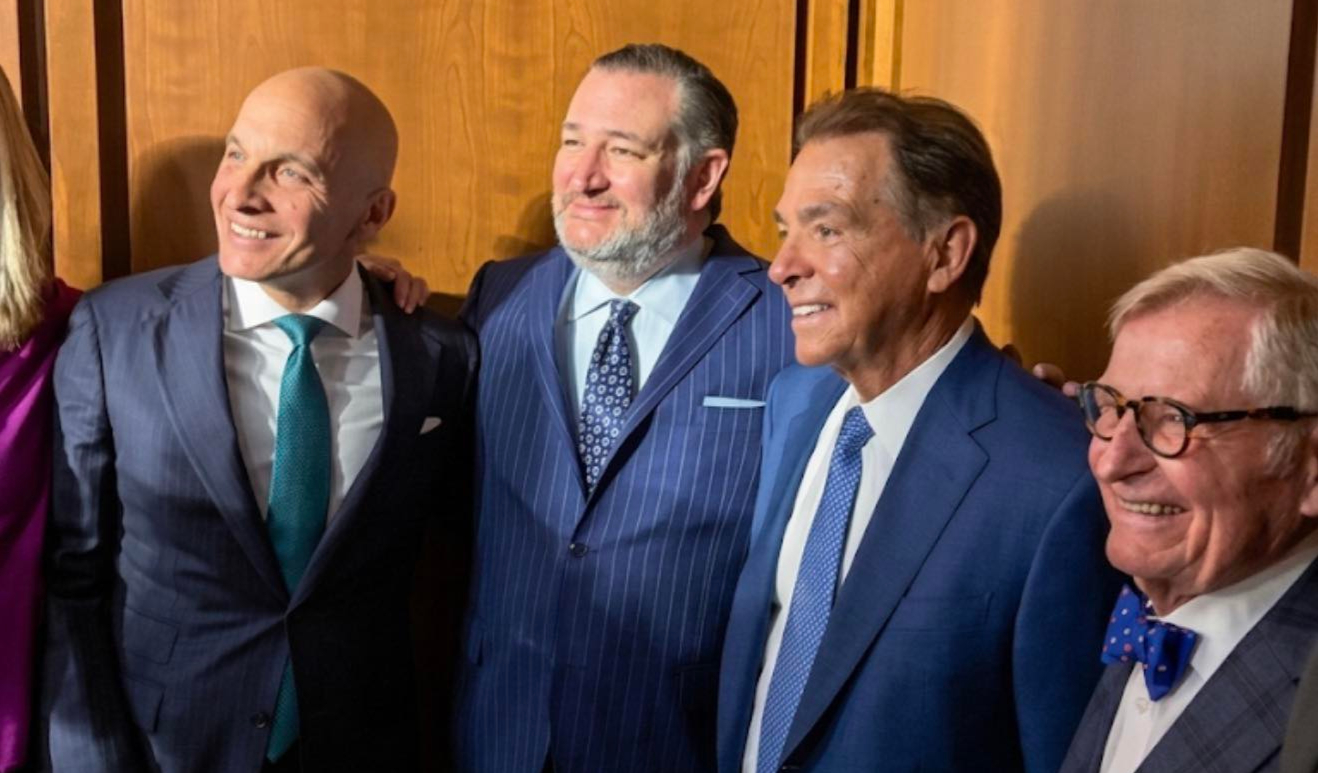
Nick Saban spent 17 years at Alabama building the most dominant program in the history of college football. He was paid $11 million per year — the highest coaching salary in the sport. He recruited players with the kind of institutional advantages that smaller programs could never match. He built an NIL collective so powerful that, after he retired, he told Congress it had received “rocket fuel.”
On Wednesday morning, he stood before the Senate Commerce Committee and asked Congress to pump the brakes.
“If you had the biggest, baddest Ferrari that you could ever have, and it was going 150 miles an hour toward the Grand Canyon, somebody needs to tap the brakes.”
Saban testified Wednesday in support of the Protect College Sports Act of 2026, a bipartisan bill introduced by Senators Ted Cruz and Maria Cantwell that would create a federal framework governing NIL compensation, transfer rules, agent regulations, and antitrust exemptions for college athletic conferences. He joined Notre Dame athletic director Pete Bevacqua, Pac-12 commissioner Teresa Gould, West Virginia president Gordon Gee, and Utah defensive end Lance Holtzclaw — the only current player in the room — as witnesses before a nearly full hearing room.
“Congress does not need to micromanage college athletics. Congress does need to fix the mess in the courts and create a national framework so the people inside college sports can enforce fair rules. Without that legal certainty, every rule becomes another lawsuit, every standard becomes another risk, and the system keeps drifting toward a professional model.”
Saban said the current NIL and transfer portal environment has become something indistinguishable from professional free agency — but without contracts, agents with formal accountability, or salary caps.
“Athletes should have real freedom. A young person should not be trapped in a bad situation. But unlimited transfer freedom, combined with pay-for-play incentives, has created something very close to unlimited free agency without contracts, without rules, and without stability.”
He said some schools are spending upward of $40 million on football rosters for the upcoming season. Gordon Gee testified that college sports overall are on track to lose $5 billion in 2026. The NCAA, Saban said, cannot fix it.
“The NCAA cannot enforce its own rules because of the litigation that happens every time it tries.”
The contradiction at the center of Saban’s testimony was not lost on critics watching from outside the room. Saban was arguably the single individual most responsible for the coaching salary arms race that inflated costs across the sport — at Alabama and by the competitive pressure his success created on every other program to pay more to compete. The bill he was testifying for includes what has been called the “Lane Kiffin Rule,” restricting coaches from leaving jobs before the end of the season — a restriction on coach movement that mirrors what Saban says he wants for players.
The testimony also landed one day after the SEC and Big Ten released a joint statement formally opposing the Protect College Sports Act — the two conferences Saban spent the defining years of his career winning titles in. He opened his remarks by noting he was “not representing any conference or any team.” He is now an ESPN analyst. ESPN holds billions of dollars in college football broadcast rights. The bill’s antitrust exemptions would allow conferences to pool those rights in ways that could directly affect those deals. No senator asked him about that.
“When the system becomes whoever raises the most money gets the best players, then we are no longer talking about college athletics as millions of fans and I have known it.”
He is correct that it has become that. He is also one of the people who made it that.