Lifestyle
6 Thanksgiving Food Safety Mistakes That Put Adults Over 65 at Higher Risk
By Curtis Jones · November 15, 2026
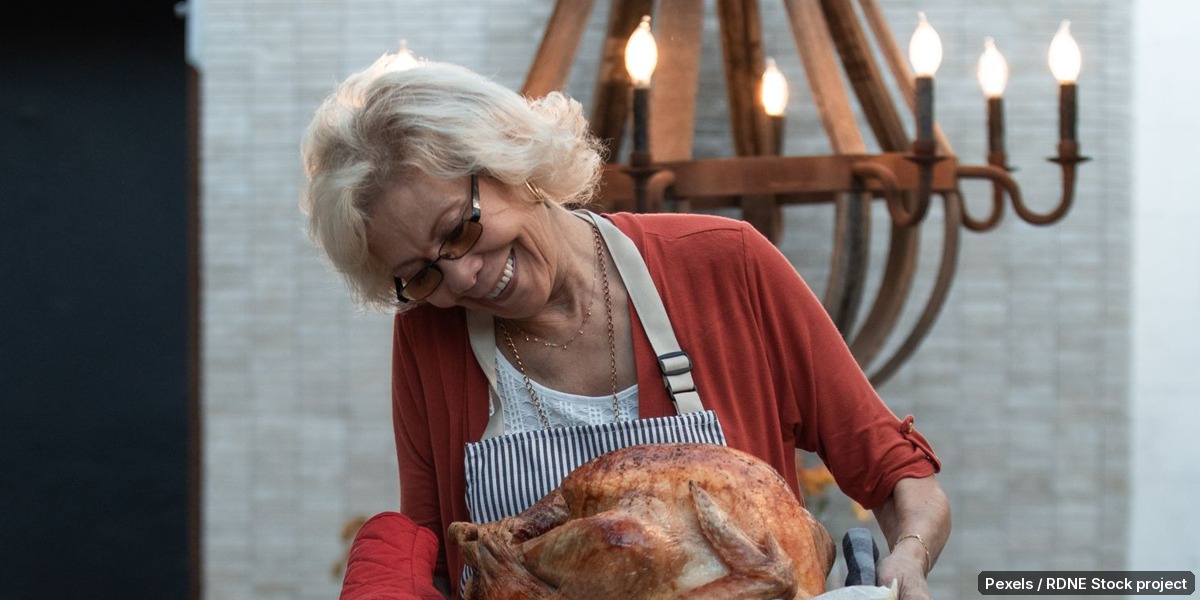
Thanksgiving brings a crowded kitchen, a bird that takes days to thaw and a refrigerator packed with leftovers. For anyone 65 or older, or anyone cooking for an older relative, a few common shortcuts carry more risk than they seem.
According to FoodSafety.gov, adults 65 and older are more likely to be hospitalized or die from foodborne illness. The site explains that the immune system grows weaker with age, the stomach may not produce enough acid to reduce bacteria, the digestive tract holds onto food longer, and the liver and kidneys may not clear bacteria and toxins as well. Chronic conditions such as diabetes and cancer can raise the risk further.
The U.S. Department of Agriculture’s Food Safety and Inspection Service says foodborne illness causes 48 million illnesses, 128,000 hospitalizations and 3,000 deaths in the United States each year. The CDC adds that outbreaks of Clostridium perfringens, a germ that grows in cooked food left at room temperature, happen most often in November and December. Here are six mistakes the agencies warn about.
1. Thawing the turkey on the counter or in hot water. The FSIS Safe Thanksgiving Guide says neither method is safe. Thaw it in the refrigerator, allowing roughly 24 hours for every four to five pounds, or in cold water, allowing 30 minutes per pound and changing the water every 30 minutes. A turkey thawed in cold water must be cooked right away. The CDC notes that a turkey left at room temperature for more than two hours becomes unsafe even if the center is still frozen.
2. Guessing when it is done. Color and a pop-up timer are not enough. The turkey must reach 165 degrees Fahrenheit, checked with a food thermometer in three places: the thickest part of the breast, the innermost part of the wing and the innermost part of the thigh. FSIS says to keep the thermometer from touching bone, which gives a false reading.
3. Trusting the stuffing inside the bird. USDA does not recommend stuffing a whole turkey, because it takes longer to cook and raises the risk of cross-contamination. Cooking stuffing in a separate dish is safer. If you do stuff the bird, the CDC says the center of the stuffing must also reach 165 degrees. FSIS adds that you should not stuff a turkey the night before.
4. Leaving the food out through the afternoon. Bacteria grow quickly between 40 and 140 degrees. FSIS says perishable food should be refrigerated within two hours, or within one hour if it is sitting somewhere above 90 degrees.
5. Keeping leftovers too long. FSIS says Thanksgiving leftovers are safe in the refrigerator for up to four days, “until the Monday after Thanksgiving,” and the CDC says to eat cooked turkey and dishes made with it within three to four days. Anything you want to save longer should go in the freezer.
6. Reheating them only until warm. Leftovers should be reheated to 165 degrees before anyone eats them. The FSIS leftovers guide says sauces, soups and gravies should be brought to a rolling boil.
One more step: wash your hands for at least 20 seconds before and after handling raw turkey, and use a separate cutting board for produce and bread.
A food thermometer is the most useful tool in the kitchen this week. For questions on the day itself, USDA’s Meat and Poultry Hotline (1-888-674-6854) is open on Thanksgiving from 8 a.m. to 2 p.m. Eastern.
This article is for general information and is not medical advice. Guidance is as stated by FoodSafety.gov, the USDA Food Safety and Inspection Service and the CDC. Anyone with symptoms of food poisoning who is older or has a chronic condition should contact a doctor. This article was produced with the assistance of AI and fact-checked against the sources cited by LightWave Reports.